
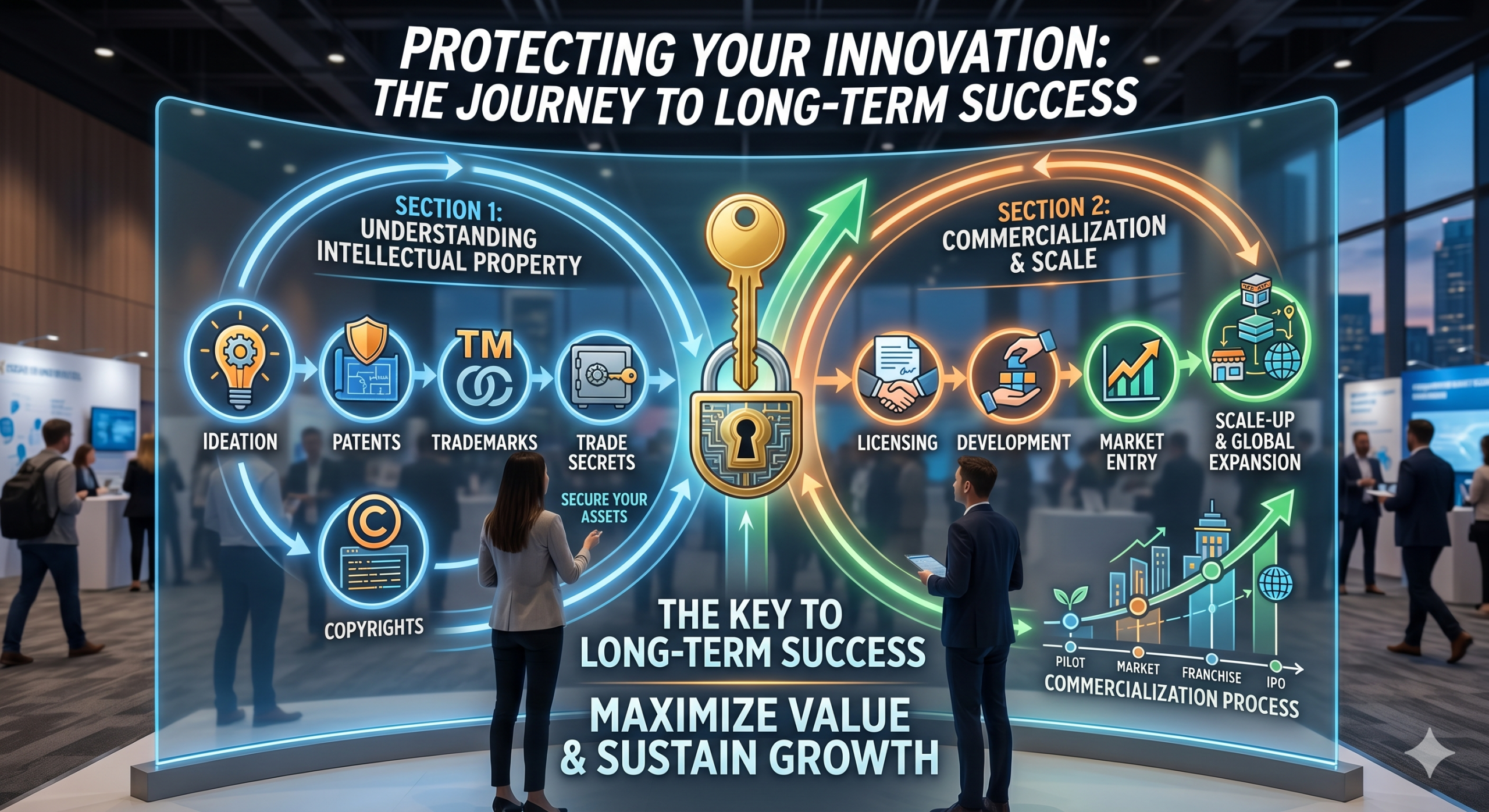
Innovation is at the heart of sustainable business growth. For Agri-SMEs and innovators operating in competitive and fast-evolving markets, having a great idea is only the first step. The real challenge, and opportunity, lies in protecting that innovation and successfully bringing it to market.
This is where Intellectual Property (IP) and commercialization strategies become critical. When understood and applied effectively, they help businesses safeguard their ideas, attract investment, scale responsibly, and achieve long-term impact.
Why Intellectual Property Matters for Agri-SMEs
Intellectual Property refers to the legal rights that protect creations of the mind, such as inventions, brands, designs, and creative works. For Agri-businesses, IP is not just a legal concept; it is a strategic business asset.
Strong IP protection can:
- Prevent imitation or unfair competition
- Increase business valuation and credibility
- Attract investors, partners, and buyers
- Enable new revenue streams through licensing or partnerships
- Support sustainable growth and market expansion
Without IP protection, even the most innovative solutions risk being copied, under-priced, or pushed out of the market.
Key Types of Intellectual Property Relevant to Agri-Businesses
Understanding the different forms of IP helps businesses choose the right protection strategy.
- Trademarks
Trademarks protect brand identifiers such as names, logos, slogans, and product labels.
Why it matters:
A strong brand builds trust with customers and differentiates products in the market. Trademarks prevent others from using similar branding that could confuse consumers.
Example:
A registered product name or logo for a fortified food product.
- Patents
Patents protect new inventions, processes, or technologies.
Why it matters:
Patents give innovators exclusive rights to their inventions for a specific period, making them highly valuable when seeking investment or partnerships.
Example:
A new food processing method, preservation technique, or agricultural technology.
- Industrial Designs
Industrial designs protect the visual appearance of a product, its shape, packaging, or aesthetic features.
Why it matters:
Distinctive packaging can influence consumer choice and strengthen brand identity.
- Copyright
Copyright protects original creative works such as manuals, training materials, software, and marketing content.
Why it matters:
It safeguards educational materials, digital tools, and creative assets used to support your business.
- Trade Secrets
Trade secrets protect confidential business information such as formulas, processes, or sourcing methods.
Why it matters:
Some innovations are best protected by secrecy rather than formal registration.
From Protection to Profit: What Is Commercialization?
Commercialization is the process of turning innovation into market value. It ensures that protected ideas generate income, impact, and growth rather than remaining unused.
Effective commercialization answers key questions:
- Who is the target market?
- What problem does the innovation solve?
- How will the product or service reach customers?
- What pricing and distribution strategies will be used?
Key Commercialization Strategies for Agri-SMEs
- Direct Market Entry
The business produces, markets, and sells the innovation directly.
Best for:
Enterprises with strong operational capacity and market access.
- Licensing
The IP owner allows another company to use the innovation in exchange for fees or royalties.
Best for:
Businesses seeking scale without heavy capital investment.
- Strategic Partnerships
Collaborating with processors, distributors, cooperatives, or development partners to reach larger markets.
Best for:
Reducing risk and leveraging existing networks.
- Franchising or Replication Models
Allowing others to replicate a proven business model under agreed standards.
Best for:
Enterprises with strong brands and standardized processes.
- Investment-Driven Scale
Using IP as a core asset to attract investors who fund growth and expansion.
Best for:
High-growth, innovation-driven Agri-businesses.
Aligning IP Strategy with Business Goals
IP protection should never exist in isolation. It must align with your:
- Business model
- Growth stage
- Market strategy
- Investment goals
For example:
- Early-stage startups may prioritize trademarks and trade secrets.
- Scaling enterprises may focus on patents, licensing, and brand protection.
A tailored approach ensures IP supports, not slows,business growth.
Common IP and Commercialization Mistakes to Avoid
- Failing to protect innovations before sharing them publicly
- Assuming IP registration alone guarantees success
- Neglecting market demand and customer needs
- Overlooking local and international regulatory requirements
- Treating IP as a legal issue instead of a business strategy
Avoiding these pitfalls saves time, resources, and future disputes.
The Role of Support Ecosystems
Accelerators, development partners, and innovation ecosystems play a vital role in helping Agri-SMEs navigate IP and commercialization. Through training, mentorship, and advisory support, enterprises can:
- Understand IP options
- Develop commercialization roadmaps
- Strengthen investment readiness
- Scale responsibly and sustainably
Conclusion: Protect Today, Scale Tomorrow
Innovation drives progress, but protected and well-commercialized innovation drives lasting success. By understanding intellectual property and aligning it with clear commercialization strategies, Agri-SMEs can safeguard their ideas, unlock new opportunities, and build resilient businesses that deliver both profit and impact.
Protect your innovation. Commercialize with purpose. Scale for the future.